The Target
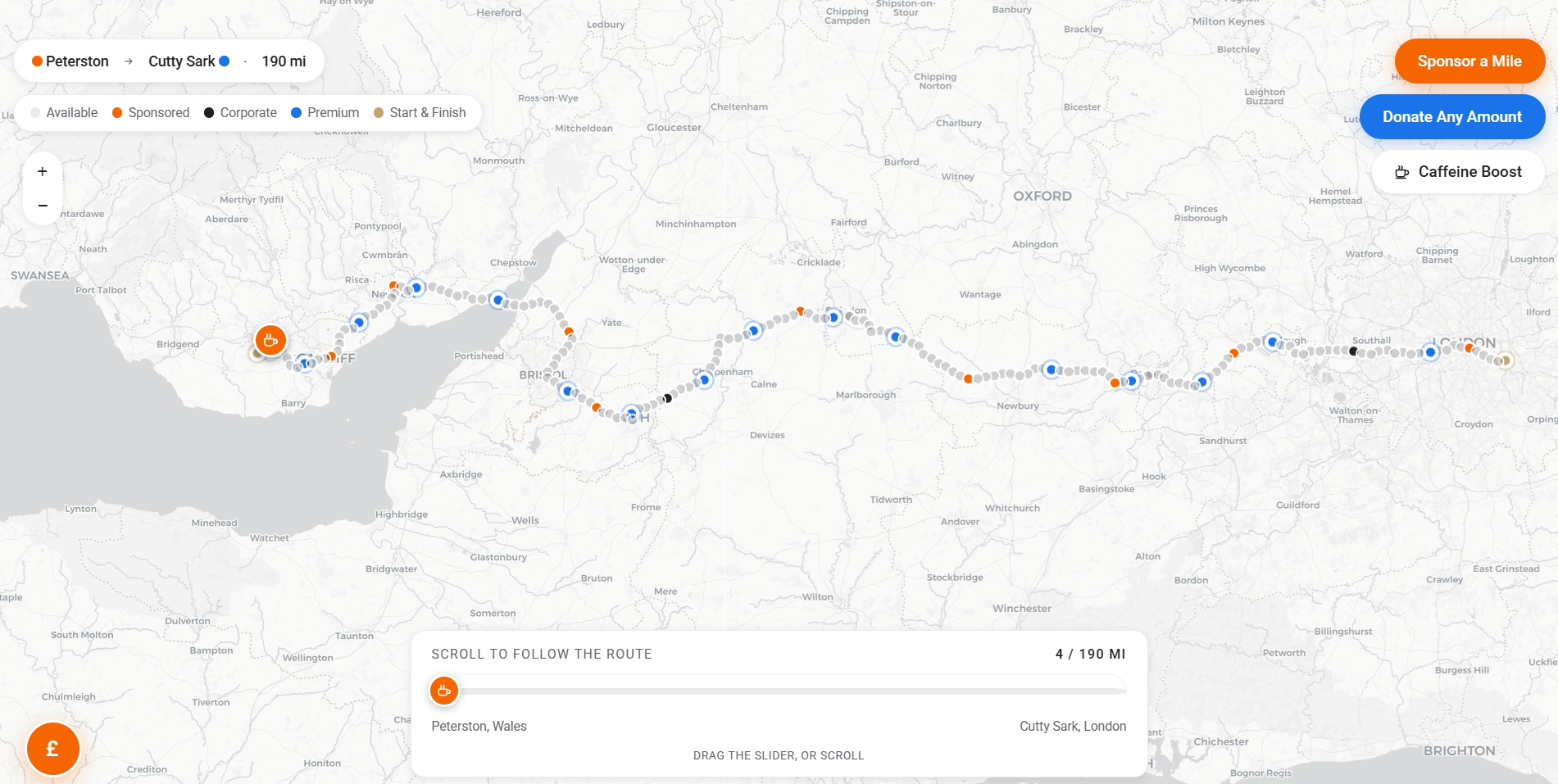
190 miles. Non-stop. A continuous line drawn across the map from the Peterston Tea Estate in Wales to the Cutty Sark in London. The aim is a sub-48-hour finish on April 2, 2027.
Bridging the Distance
Track the training.
Every run on the road to the start line — stats refresh from my Strava feed.
The route itself is deliberately symbolic. It is not just a random stringing together of country lanes and dual carriageways to hit an arbitrary mileage target. By starting at the Peterston Tea Estate—a pioneering site representing the physical origin of the leaf—and finishing at the Cutty Sark—a vessel symbolising the historical velocity and global expansion of the trade—the 190 miles become a physical homage to the industry I have spent my adult life working in.
But the geography is only the surface level. The real engine driving this endeavour is dual-faceted. I have been in the tea trade for over a decade. It has afforded me a livelihood, friendships, and a global perspective. I want to use this challenge to support the UK Tea Trade Benevolent Society (UKTTBS). As a trustee, I have seen the quiet, vital work they do behind closed doors. They are the safety net for the people who form the backbone of our industry, stepping in when life takes a devastating and unexpected turn.
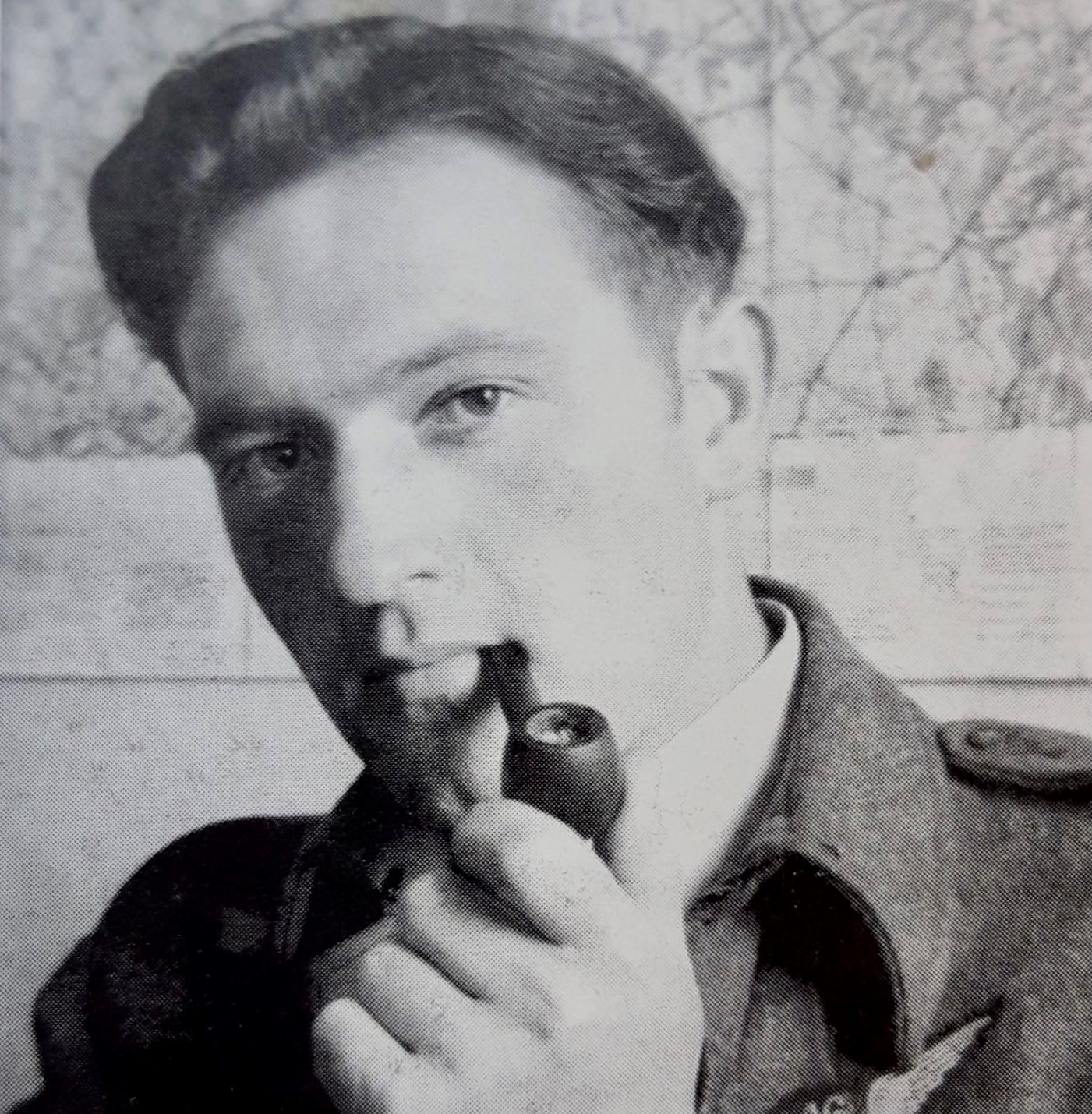
The second charity is deeply personal. My grandfather, Harvey Taylor, passed away with Alzheimer’s. Watching a disease systematically strip away the mind and memories of someone you love is a helpless, agonising experience. The contrast is not lost on me: I am choosing to build memories through immense physical struggle, while Alzheimer’s silently deletes them. I want to fund the researchers at Alzheimer’s Research UK who are working tirelessly in labs to finally break this disease.
The Midnight Balancing Act
Let's not romanticise the process: engineering the fitness required for a 190-mile run is rarely glamorous, and balancing it with actual life is often thoroughly ugly. Between fulfilling my duties for the brand, travelling, and walking through the front door to my wife and three children, time is a commodity I simply do not have in abundance.
Training for an ultra-marathon requires extreme volume. When your days are fully spoken for, that volume has to be extracted from your nights. It means setting alarms for 4:00 AM, lacing up shoes in the pitch black while the house is silent, and forcing out 15 miles before the sun comes up. It means returning home after a brutal day in the tasting room, helping put the children to bed, and then heading back out into the rain at 9:30 PM to log another two hours on tired legs.
It is going to be an absolute, exhausting balancing act. There will be missed sessions, there will be guilt, and there will be profound fatigue. But we will find the rhythm.
Documenting the Descent
I built this tracking hub because I wanted to document the reality of the preparation, rather than just presenting a polished finish-line photo in April 2027. Over the next year, you can expect brutal honesty on every facet of the journey. I will be categorising the log to cover:
- The Gear: A forensic look at what survives the long haul. Which headlamps last the night, the waterproofs that actually work, and the strict shoe rotation strategy required to keep my feet intact over 190 miles of tarmac and trail.
- The Mindset: The mental gymnastics required to keep moving when the body initiates a full-system shutdown. How to compartmentalise the distance so it doesn't crush you psychologically.
- Nutrition: Figuring out how to force down and process 20,000 calories while on the move, and training the gut to accept solid food under extreme duress.
- Physio and Recovery: A transparent look at the inevitable injuries, the early shin splints, the niggles, and how my physio team helps me patch them up to face the next training block.
The distance is terrifying. The logistics are complex. The alarm clocks are going to be brutal. But the target is locked, and the reasons are bigger than the pain. Let's get to work.